The proposed Psychiatric Emergency Centre (PEC) Built Environment Intervention addresses the critical need for enhanced mental healthcare spaces within healthcare facilities, focusing on the Royal Brisbane and Women’s Hospital (RBWH). In recognition of the pivotal role emergency departments play in providing immediate care for individuals in psychiatric crisis, this initiative seeks to transform the PEC environment better to support staff and consumers. Grounded in research highlighting the profound impact of physical surroundings on mental well-being, the project emphasises the importance of creating therapeutic spaces conducive to recovery and emotional regulation. The project aims to mitigate distress, reduce restraint rates, and ultimately improve outcomes for individuals seeking mental health care in emergency settings by integrating sensory interventions and best practices in design. This collaborative project was informed by consultation with occupational therapists and pre-evaluation conducted by the hospital team to ensure responsiveness to the needs of staff and consumers.
The Approach
The QUT Design Team, including Professor of Design Psychology – Evonne Miller and Designer – Dr Sarah Johnstone, collaborated closely with hospital project leads to conduct a comprehensive site visit of the Psychiatric Emergency Centre (PEC) facility. From the insights gained from the site visit and pre-evaluation data, the design team developed preliminary design proposals to enhance various aspects of the PEC environment to serve both adult and adolescent populations better.
The proposed interventions include:
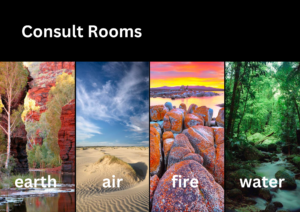
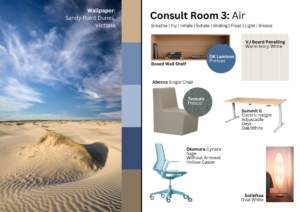
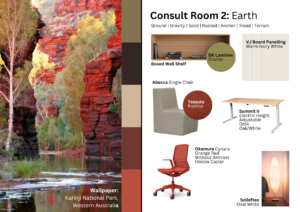
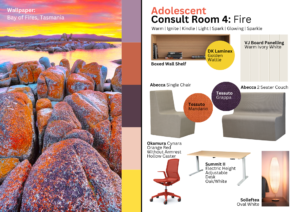
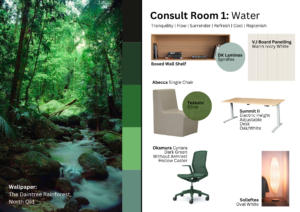
- Consult Rooms: Four consult rooms, including one dedicated to consultations with adolescents, were reimagined to evoke specific sensory experiences inspired by the elements of water, earth, air, and fire. Each room is designed to foster feelings of tranquillity, grounding, lightness, and warmth, respectively.
 |
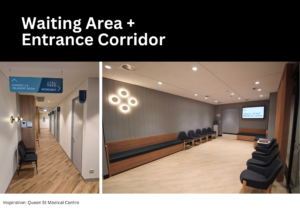
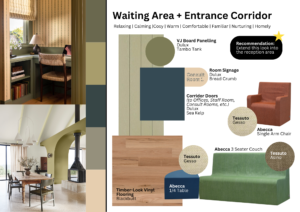
- Waiting Area & Entrance Corridor: The waiting area and entrance corridor were conceptualised to create a welcoming and calming atmosphere characterised by relaxation, warmth, and familiarity.
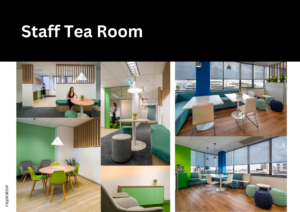
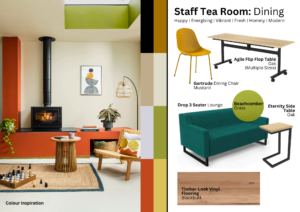
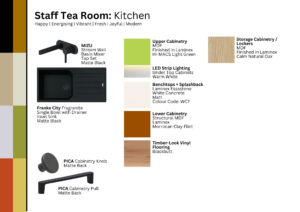
- Staff Tea Room: The staff tea room was designed to promote feelings of happiness, energy, and modern comfort, fostering a vibrant and rejuvenating environment for staff members.
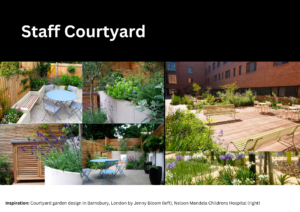
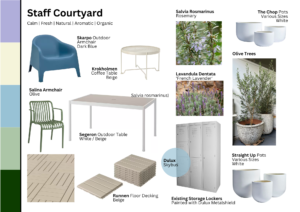
- Staff Courtyard: The staff courtyard was envisioned as a serene and natural space, providing a tranquil retreat to unwind and recharge.
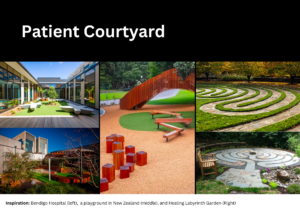
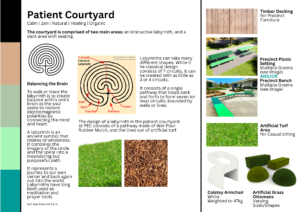
- Patient Courtyard: The patient courtyard is a therapeutic oasis featuring an interactive labyrinth that promotes healing and balance. The labyrinth, a symbol of wholeness and mindfulness, offers patients a meditative journey to their centre and back, contributing to their overall well-being.
These proposed changes reflect a holistic approach to environmental design to improve the overall experience and outcomes for staff and consumers within the PEC setting. Through thoughtful consideration of sensory elements and therapeutic design principles, the project seeks to create spaces that support emotional regulation, promote healing, and enhance the quality of care provided to individuals in psychiatric crises.
The Challenges
Designing for psychiatric emergency environments presents unique challenges that extend beyond the typical considerations for specifying healthcare furniture. In addition to ensuring hygiene and durability, strict guidelines dictate that furniture must be soft and devoid of features that could pose harm to patients or staff. This includes the need for furniture to be resistant to tampering or use as a weapon, with no sharp edges, openings, or detachable parts. The design process involves sourcing specialised furniture tailored for acute mental health settings and challenging behaviour environments.
The Concepts
Consultation Rooms
 |
 |
 |
 |
Waiting Area & Entrance Corridor
 |
 |
Staff Tea Room
 |
 |
 |
Staff Courtyard
 |
 |
Patient Courtyard
 |
 |