A new national research facility dedicated to analysing light-responsive molecules and advanced polymer materials will be established at QUT, following a major investment through the Australian Research Council’s (ARC) Linkage Infrastructure, Equipment and Facilities (LIEF) scheme.
The bespoke equipment offers a capability currently unavailable in Australia: the ability to trigger light-induced reactions on demand and immediately analyse the resulting molecular changes.
This will allow researchers to observe and understand interactions at the molecular scale in ways not previously possible.
Dr Marshall said the mass spectrometer will accelerate advances in fields where light-driven processes play a central role, from next-generation materials and synthetic chemistry to atmospheric science and renewable energy technologies.
“Light is one of our most abundant natural resources, and it underpins countless emerging technologies,” Dr Marshall said.
“To harness its full potential, we need to understand exactly how molecules behave the moment they absorb light. The mass spectrometer will allow us to capture that detail in real time, opening the door to smarter, more sustainable chemical and materials innovation.”
The project brings together an interdisciplinary team of leading Australian chemists, materials scientists, atmospheric scientists and analytical experts from QUT, Griffith University, The University of Wollongong and The University of Queensland.
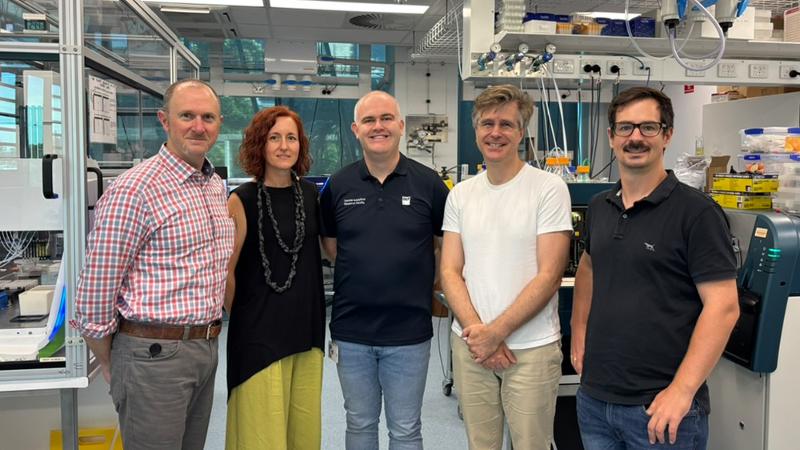
Other chief investigators from QUT include Professor Stephen Blanksby, Distinguished Professor Christopher Barner-Kowollik, Associate Professor Branka Miljevic and Associate Professor Hendrik Frisch.
Beyond scientific impact, Dr Marshall said the investment supported national priorities in clean energy and advanced manufacturing.
“The mass spectrometer will help develop novel light-responsive materials, improve understanding of atmospheric processes relevant to climate modelling and support industries developing future-focused technologies,” he said.
The project is one of almost 30 initiatives funded through the ARC LIEF scheme, which this year awarded over $34 million to strengthen Australia’s research capability.
ARC Chief Executive Officer Professor Ute Roessner said the scheme enables universities and industry to pool resources to access infrastructure that would be impossible to deliver individually.
“This investment gives researchers access to specialised equipment and large-scale infrastructure that no single institution could reasonably deliver alone. By pooling resources, they create opportunities for progress that would not otherwise be possible,’ Professor Roessner said.
“These new projects will enhance Australia’s research capability in areas of national priority, including sustainable manufacturing, quantum technology, and advances in diagnostic tools. They will help ensure Australia remains a leader in collaborative, world-class research.”
Main photo (left to right): Professor Stephen Blanksby, Associate Professor Branka Miljevic, Dr David Marshall, Distinguished Professor Christopher Barner-Kowollik, Associate Professor Hendrik Frisch
Media contact:
Lauren Baxter
QUT Media
media@qut.edu.au
07 3138 2361 / 0407 585 901 (After Hours)