Addressing the world’s greatest source of disability
The backbone of everyday health
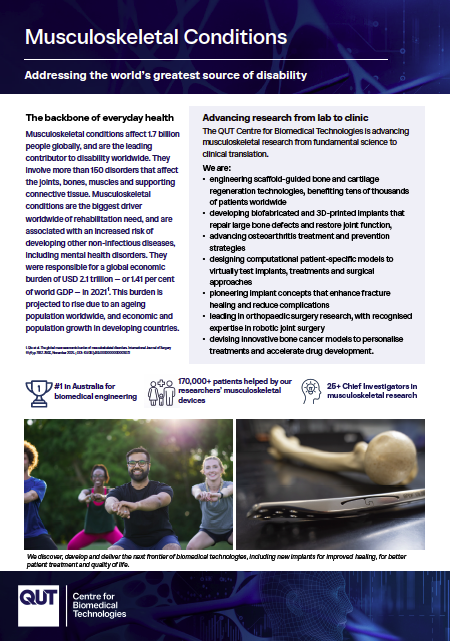
Musculoskeletal conditions affect 1.7 billion people globally, and are the leading contributor to disability worldwide. They involve more than 150 disorders that affect the joints, bones, muscles and supporting connective tissue. Musculoskeletal conditions are the biggest driver worldwide of rehabilitation need, and are associated with an increased risk of developing other non-infectious diseases, including mental health disorders. They were responsible for a global economic burden of USD 2.1 trillion – or 1.41 per cent of world GDP – in 2021 (1). This burden is projected to rise due to an ageing population worldwide, and economic and population growth in developing countries.
1. Qiu et al. The global macroeconomic burden of musculoskeletal disorders. International Journal of Surgery 111(11):p 7857-7866, November 2025. | DOI: 10.1097/JS9.0000000000003072

Advancing research from lab to clinic
The QUT Centre for Biomedical Technologies is advancing musculoskeletal research from fundamental science to clinical translation.
 We discover, develop and deliver the next frontier of biomedical technologies, including new implants for improved healing, for better patient treatment and quality of life.
Our researchers are:
-
engineering scaffold-guided bone and cartilage regeneration technologies, benefiting tens of thousands of patients worldwide
-
developing biofabricated and 3D-printed implants that repair large bone defects and restore joint function
-
advancing osteoarthritis treatment and prevention strategies
-
designing computational patient-specific models to virtually test implants, treatments and surgical approaches
-
pioneering implant concepts that enhance fracture healing and reduce complications
-
leading in orthopaedic surgery research, with recognised expertise in robotic joint surgery
-
devising innovative bone cancer models to personalise treatments and accelerate drug development.
Our researchers
-
 Assoc Prof Nathalie Bock
-
 Prof Ross Crawford
-
 Prof Travis Klein
-
 Assoc Prof Paige Little
-
 Assoc Prof Saulo Martelli
-
 Dr Jacqui Mcgovern
-
 Prof Peter Pivonka
-
 Assoc Prof Indira Prasadam
Capability statement
Download the flyer and read more
Case studies
Improved mattresses for everyday sleep and spinal surgery – Associate Professor Paige Little
Development of joint biomechanics solutions – Professor Peter Pivonka and Associate Professor Saulo Martelli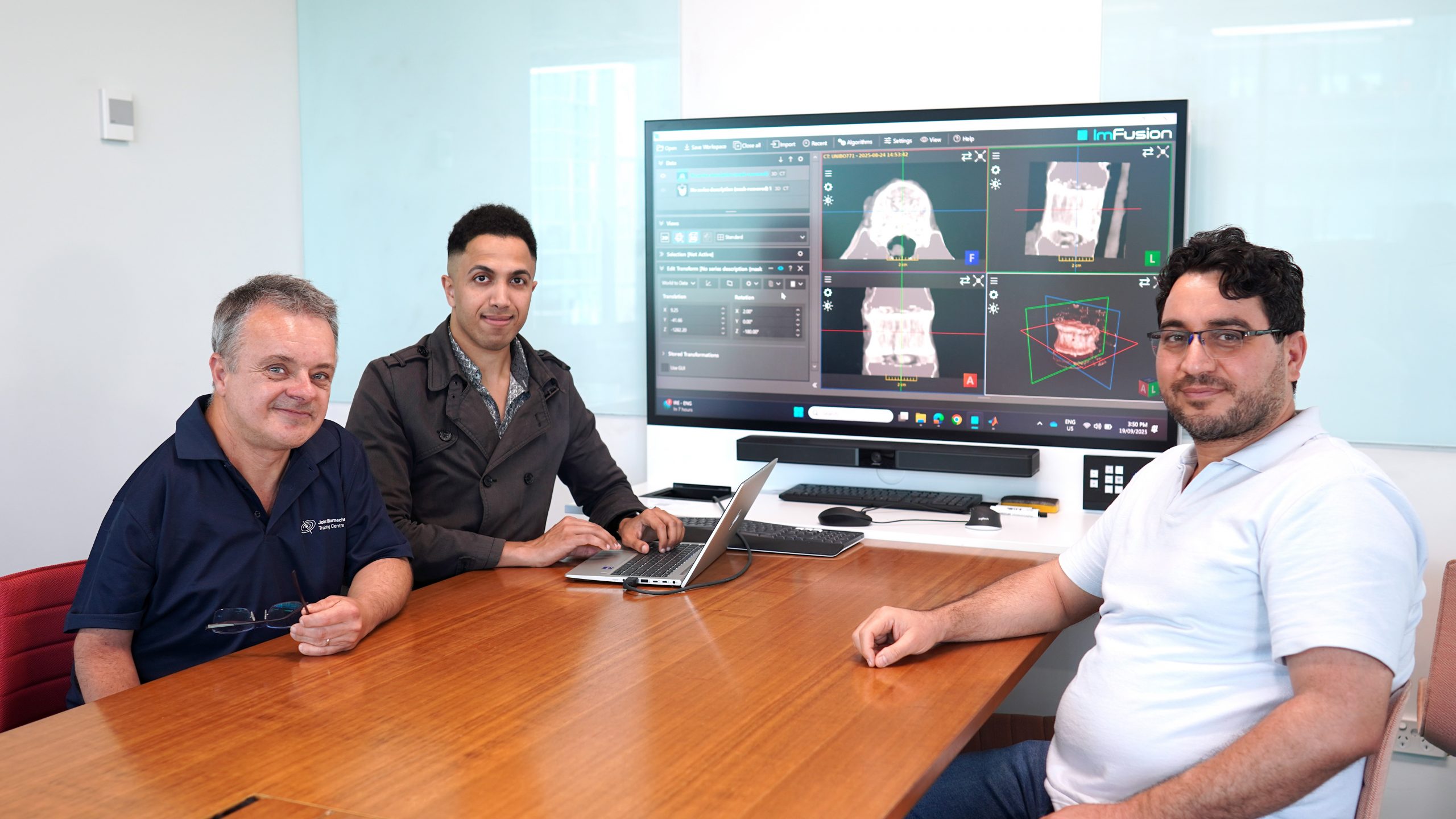
Better treatments for bone cancer – Associate Professor Nathalie Bock and Dr Jacqui McGovern
Clinical research solutions for osteoarthritis – Professor Travis Klein, Associate Professor Indira Prasadam and Professor Ross Crawford
