Dr. Richard Gordon leads a multi-disciplinary, industry-partnered research program in Translational Neuroscience which integrates immunology, drug development, pharmacology, metabolomics and microbial metagenomics.
Research Projects

Research Impact
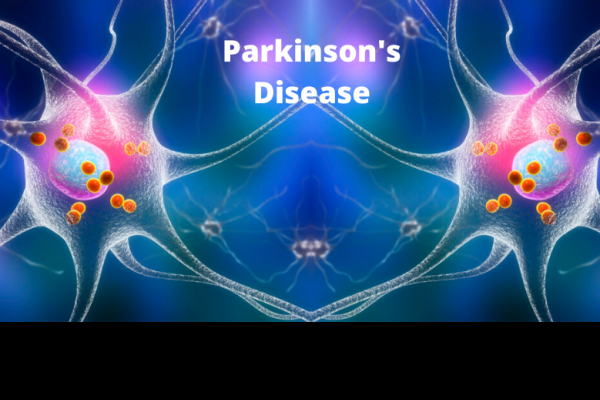
Dr. Gordon’s research has contributed to ground-breaking advances in the field of neuroinflammation and Parkinson’s disease, including discovery of a novel signalling paradigm for prokineticin signalling during neurodegeneration, and inflammasome activation as a driver of synuclein pathology and disease progression in PD. He established the Queensland Drug Repurposing Initiative (QDRI) which aims to accelerate new treatments for neurological diseases through drug repositioning.
Dr. Gordon is a Board-certified toxicologist with the American Board of Toxicology (DABT) and has served as a member of the Gene Technology Technical Advisory Committee for the Australian Federal Government. He is also a Science Ambassador for the World Parkinson Coalition (WPC) for Australia and the Asia Pacific Region.
Publications (read more)
Featured Publications
-
Inflammasome inhibition prevents α-synuclein pathology and dopaminergic neurodegeneration in mice
Gordon, Richard, Albornoz, Eduardo A., Christie, Daniel C., Langley, Monica R., Kumar, Vinod, Mantovani, Susanna, Robertson, Avril A. B., Butler, Mark S., Rowe, Dominic B., O’Neill, Luke A., Kanthasamy, Anumantha G., Schroder, Kate, Cooper, Matthew A. and Woodruff, Trent M. (2018). Inflammasome inhibition prevents α-synuclein pathology and dopaminergic neurodegeneration in mice. Science Translational Medicine, 10 (465) aah4066, eaah4066. doi: 10.1126/scitranslmed.aah4066
-
Chen, Weiqiang, Foo, Suan-Sin, Zaid, Ali, Teng, Terk-Shin, Herrero, Lara J., Wolf, Stefan, Tharmarajah, Kothila, Vu, Luan D., van Vreden, Caryn, Taylor, Adam, Freitas, Joseph R., Li, Rachel W., Woodruff, Trent M., Gordon, Richard, Ojcius, David M., Nakaya, Helder I., Kanneganti, Thirumala-Devi, O’Neill, Luke A. J., Robertson, Avril A. B., King, Nicholas J., Suhrbier, Andreas, Cooper, Matthew A., Ng, Lisa F. P. and Mahalingam, Suresh (2017). Specific inhibition of NLRP3 in chikungunya disease reveals a role for inflammasomes in alphavirus-induced inflammation. Nature Microbiology, 2 (10), 1-11. doi: 10.1038/s41564-017-0015-4
-
Gordon, Richard, Neal, Matthew L., Luo, Jie, Langley, Monica R., Harischandra, Dilshan S., Panicker, Nikhil, Charli, Adhithiya, Jin, Huajun, Anantharam, Vellareddy, Woodruff, Trent M., Zhou, Qun-Yong, Kanthasamy, Anumantha G. and Kanthasamy, Arthi (2016). Prokineticin-2 upregulation during neuronal injury mediates a compensatory protective response against dopaminergic neuronal degeneration. Nature Communications, 7 (1) 12932, 12932.1-12932.18. doi: 10.1038/ncomms12932
-
Gordon, Richard, Singh, Neeraj, Lawana, Vivek, Ghosh, Anamitra, Harischandra, Dilshan S., Jin, Huajun, Hogan, Colleen, Sarkar, Souvarish, Rokad, Dharmin, Panicker, Nikhil, Anantharam, Vellareddy, Kanthasamy, Anumantha G. and Kanthasamy, Arthi (2016). Protein kinase Cδ upregulation in microglia drives neuroinflammatory responses and dopaminergic neurodegeneration in experimental models of Parkinson’s disease. Neurobiology of Disease, 93, 96-114. doi: 10.1016/j.nbd.2016.04.008
-
Mantovani, Susanna, Gordon, Richard, Li, Rui, Christie, Daniel C., Kumar, Vinod and Woodruff, Trent M. (2016). Motor deficits associated with Huntington’s disease occur in the absence of striatal degeneration in BACHD transgenic mice. Human Molecular Genetics, 25 (9) ddw050, 1780-1791. doi: 10.1093/hmg/ddw050
-
Brennan, Faith H., Gordon, Richard, Lao, Hong W., Biggins, Patrick J., Taylor, Stephen M., Franklin, Robin J. M., Woodruff, Trent M. and Ruitenberg, Marc J. (2015). The complement receptor C5aR controls acute inflammation and astrogliosis following spinal cord injury. Journal of Neuroscience, 35 (16), 6517-6531. doi: 10.1523/JNEUROSCI.5218-14.2015