Project Description:
Each year, over 1.5 billion tires reach the end of their lifespan, with more than 60% being either landfilled, stockpiled, illegally dumped, or simply lost, contributing to a global issue of contaminated waste. In Australia, approximately 56 million equivalent passenger units of end-of-life tires were generated in 2015–16, with only 35 to 40% being recycled. In Queensland alone, around 8.5 millions of these end-of-life tires ended up in landfills, stockpiles, or unknown locations. Due to their durable nature, tires are not naturally degradable and pose economic, health, and environmental risks if not properly managed.
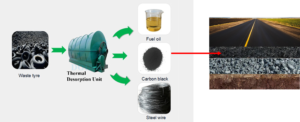
Entyr, an Australian company, employs a unique low-emission thermal desorption technology that processes waste tires cleanly, without the use of chemicals or acids. The anaerobic thermal desorption process, conducted at a low temperature (<600 °C) in a modular reactor called a Thermal Desorption Unit (TDU), transforms shredded waste tires into liquid hydrocarbon, recyclable steel, and recovered carbon black. This research aims to assess the short-term and long-term properties and performance of recovered carbon black (RCB) in Hot Mix Asphalt (HMA), comparing it to conventional hot mix asphalt. The goal is to propose design properties for pavements incorporating HMA with RCB as a sustainable and environmentally friendly pavement construction material.
Entyr Limited and Austek Roads are supporting this project by contributing $60k in cash towards a PhD scholarship and providing necessary in-kind support.
| Project Details:
Duration: 2021- 2024 Research Methods:
|
Team: QUT :
Collaborative Partners:
|