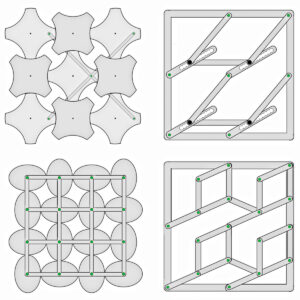
 Reprogrammable meta-materials and -devices. Materials and systems with tunable shape and stiffness are desired in many applications, including healthcare, aerospace, and robotics. These materials/systems can lead to devices that can perform several functions, which would otherwise be impossible to achieve using conventional materials and hence significantly reduce the cost and time associated with performing these functions. For example, materials with overall contour can be used as off-the-shelf deployable scaffolds implantable in defects with various geometries using minimally invasive surgeries. Systems with tunable shape and stiffness are useful to improve manoeuvrability in moving marine and aerospace systems. They can also be used in robotic devices as they can interact with hard and soft objects with various shapes. Our team develops novel generations of reprogrammable meta-materials and -devices for these applications.
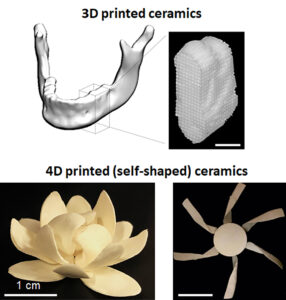 Ceramic and glass 3D/4D printing. Ceramic and glass products are a multi-billion-dollar industry, with applications in biomaterial, protective armour, construction and high-temperature/harsh-environment systems. However, the performance and utility of existing ceramics and glasses are constrained by their brittleness and difficulty of forming them into complex shapes without compromising their mechanical properties. Our team addresses these challenges by (a) implementing bioinspired architectures in these materials using 3D printing and (b) developing novel 4D printing procedures for these materials. The bioinspired architectures prevent crack propagation and, therefore, improve their toughness. This strategy evolved in highly mineralized biological materials such as bone, tooth enamel, and sea shells to enhance the toughness of minerals.
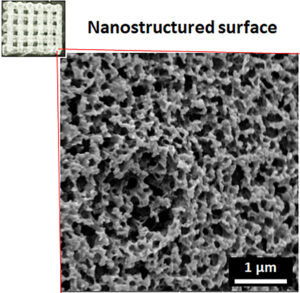 Bactericidal polymer and ceramic surfaces. The overuse of antibiotics significantly contributes to antimicrobial resistance, leading to infection. Alternative approaches to prevent infection are needed. The problem is particularly pronounced for percutaneous (skin-crossing) devices, with infection rates reported as high as 30% for urinary catheters. Developing mechano-bactericidal nanostructured surfaces on implants, inspired by the bactericidal surfaces of insect wings, has proved to be an efficient pathway to reduce the growth of bacteria. However, the techniques used to develop these nanostructures are generally effective only on 2D external surfaces and are time- and labour-intensive. In addition, most of these techniques have been developed for metallic (e.g., titanium) and ceramic implants. Our team develops new techniques to create 3D nanostructured bactericidal surfaces on polymeric implants.